Pet aftercare is one of the few service categories where demand is structural rather than discretionary: dogs and cats die, and the families who loved them look for a respectful way to say goodbye. The global pet funeral services market was valued at USD 1.7 billion in 2025 and is projected to reach USD 3.6 billion by 2033, a 9.6% CAGR (Grand View Research, 2025). Cremation accounts for 66% of service revenue, and specialized aftercare providers are the fastest-growing channel (Grand View Research, 2025). If you are planning a pet crematory, adding aftercare to an existing funeral home, or building a program with veterinary clinics, this guide maps the product half of the business: what families take home, where it is made, and how to stock it without tying up your capital.
What a service actually hands over
Think of the product line as four stations along the family's journey. Each station has a distinct job, and each is a distinct purchase.
| Stage | The family moment | Products to have ready |
|---|---|---|
| Arrangement | Choosing burial or cremation, sometimes a viewing | Wooden, cardboard or willow caskets; biodegradable options |
| Farewell | The goodbye itself, before ashes return | Paw print kits, fur keepsake vials, memorial candles, condolence cards |
| Return of ashes | The handover appointment | Urns sized by body weight, keepsake urns, memorial certificates |
| Remembrance | Weeks, months and years later | Memorial stones, garden lights, keepsake jewelry, photo frames, crystals |
Two of these stations are systematically under-stocked by new operators. The farewell station matters because communal cremation returns no ashes to the family — for those households a paw impression or a lock-of-fur vial may be the only physical memory they ever hold. And the remembrance station is where repeat business hides: a family that bought an urn from you will come back for a garden stone, a second keepsake, a seasonal ornament.
The inventory that matters
Size risk is the main trap. Urn demand follows the local weight distribution of dogs and cats, and in most Western markets the bulk of cases fall into the 10–30 kg tiers — a compact range covering roughly 0.7–2.1 litres serves the majority of needs. Publish a size chart, put it in every confirmation email, and train staff to ask the pet's weight before recommending anything (see our urn size chart for the reference table).
Paw print kits are the opposite of size risk: they fit every species and every body weight, they are light, inexpensive, and they cannot be returned for "fitting wrong". For a vet-clinic counter they are close to the perfect product (see our paw print kit line for the clay, ink and plaster variants).
Where the products come from
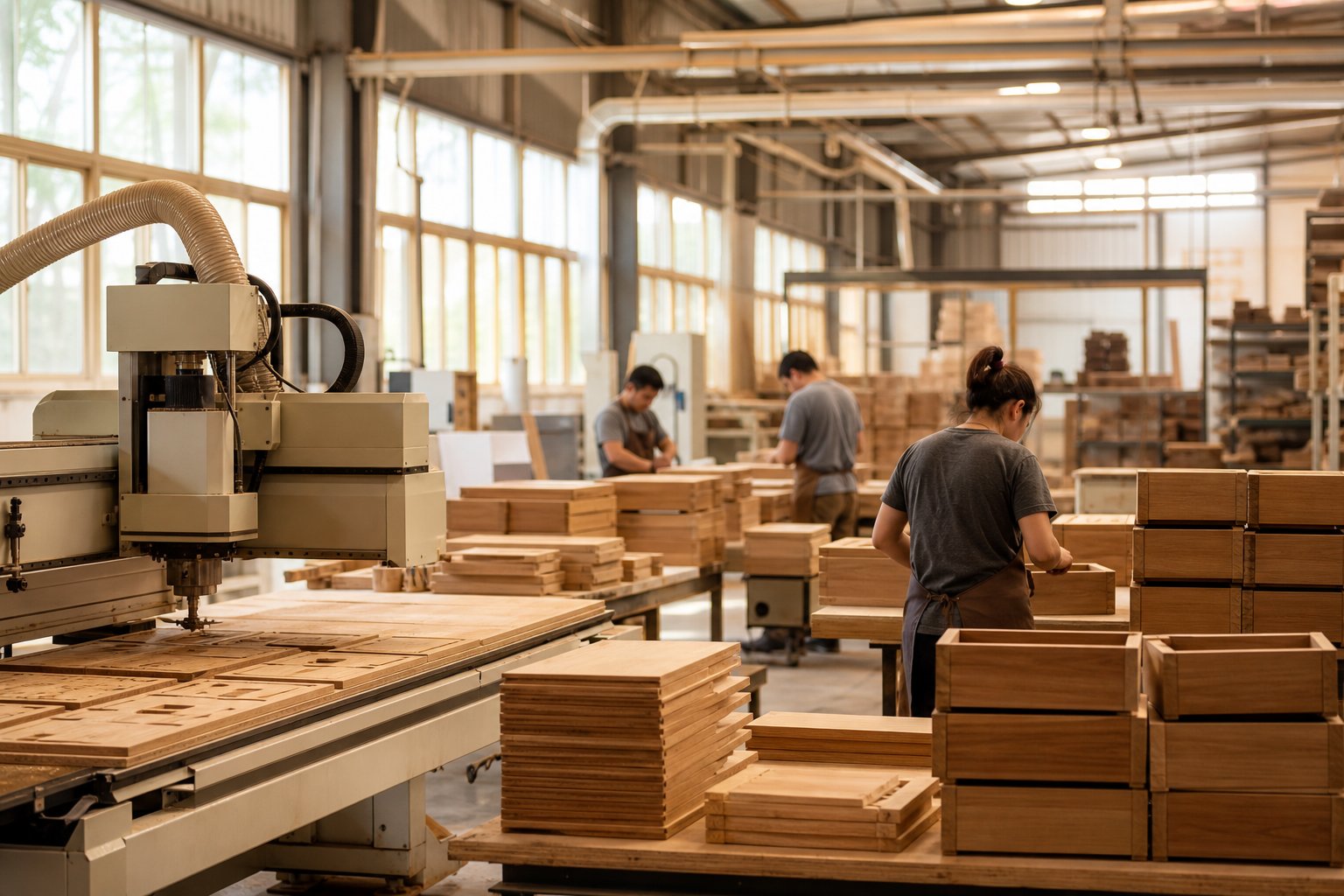
Nearly every memorial category has a mature craft cluster behind it. Wooden caskets and urns concentrate in China's Cao county woodworking cluster in Shandong, where the wood-processing industry generated RMB 13.8 billion of output in January–May 2026 alongside a pet-products industry chain that exports worldwide (China News Service Shandong, 2026). Ceramics come from Jingdezhen and Chaozhou, crystal from Pujiang, engraved stone from the Hui'an and Quyang carving clusters, and willow eco-caskets from the Funan and Gushi weaving belts (see our factory and cluster overview). Sourcing factory-direct from these clusters typically means lower minimums, deeper customization and better margin than local wholesale — at the cost of longer lead times and import handling. Most services settle on a hybrid: stock the core SKUs, dropship the long tail directly to families.
What to ask any supplier before the first PO
- MOQ tiers and private-label options. At PAWSANGEL: 100 pcs for stock private-label, 500 pcs for customized, 1,000 pcs for deep customization such as new molds.
- Sample lead time. 3–5 days for engraved samples, 7–12 days for standard samples.
- Fragile-goods packaging and a written breakage policy. Independent foam inserts, double-boxing, spare units per order.
- Dropship capability with neutral packaging, so nothing brand-foreign reaches the family.
- Wood source disclosure (species, origin country) if you serve EU customers — EUDR due diligence applies to wood products from 30 December 2026 for large and medium operators and from 30 June 2027 for micro and small ones (European Commission).
A clean boundary of responsibilities
One distinction keeps new operators out of trouble: a service provider handles ashes under the rules of its own jurisdiction; a product supplier ships empty urns and kits. Transporting ashes is arranged between the family's service provider and the carrier under the applicable postal and air rules — your supplier's job ends with compliant, protective packaging of empty goods. Make sure your staff, your website and your supplier agreement all keep that line clear.
FAQ
How much inventory should a new service start with?
A compact core of roughly 12–20 SKUs: four to six urn sizes matched to your local weight distribution, one or two keepsake lines, paw print kits, candles, cards and a couple of garden items. Expand after your first hundred cases tell you what your market actually asks for (inference).
Which products work on a vet-clinic counter?
Small, light, sizing-free items: paw print kits, keepsake jewelry, mini urns and sympathy cards. High emotional value per cubic centimeter, no fit risk, easy to hand over in person.
Can our supplier ship directly to families?
Yes, via a dropship program: neutral outer packaging, fast dispatch — PAWSANGEL dispatches in-stock private-label orders within 48 hours of payment — and per-order tracking. The empty product ships to the family; ashes handling remains with your service.
Do burial services need a different product line?
Partially. Burial calls for caskets — wooden, cardboard or biodegradable — plus garden stones; cremation calls for urns and keepsakes. The overlap (stones, candles, cards) is broad enough that one supplier can cover both lines.
Sources & notes: Grand View Research (2025) for global pet funeral services market size, cremation share and channel structure; IBISWorld (2024) for the US pet cremation services market (USD 1.3 bn, 12.5% five-year CAGR); CareCredit/Synchrony (2023) for US cremation fee ranges and base urn pricing; China News Service Shandong (2026) for the Cao county woodworking cluster; European Commission Access2Markets for EUDR application dates; AVMA (2025) for US pet population. Inventory recommendations are PAWSANGEL sourcing practice (inference).
Building an aftercare product line? Start from your market's weight tiers
We match urn volumes and kit contents to your service flow and quote with MOQ from 100 pcs — reply within 12 business hours.