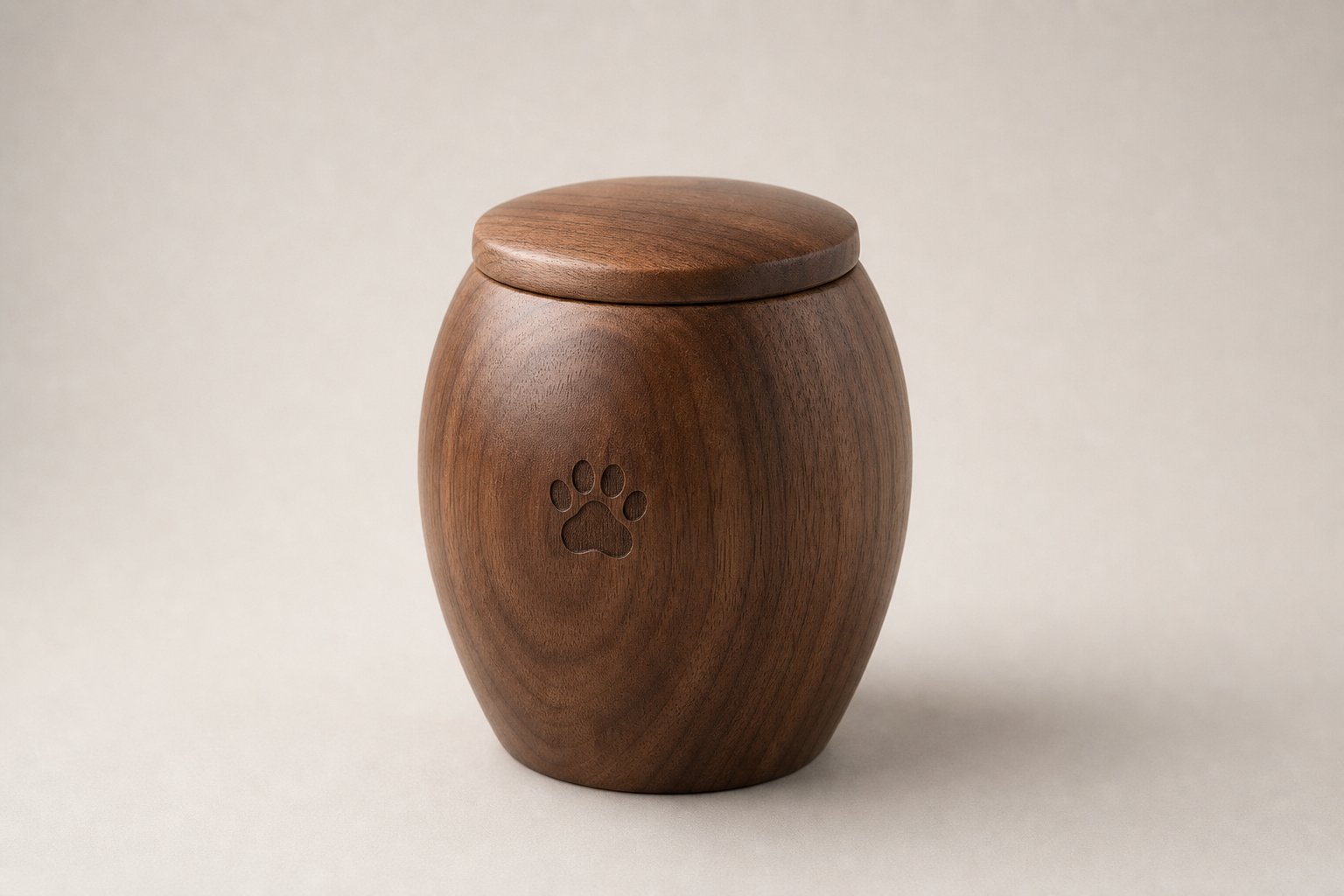
Choosing the right urn size is the single most common pre-purchase question in pet aftercare retail — and the most common cause of returns when shops guess. This reference table matches dog and cat weight tiers to urn capacity, so your team (and your customers) can stop guessing.
Urn size chart for dogs and cats
| Body weight | Required capacity | Typical urn size | Suitable styles |
|---|---|---|---|
| Up to 10 kg (22 lb) | up to 0.7 L (≈40 cu in) | 10–14 cm keepsake or small urn | Keepsake urns, mini urns, paw print kits with urn |
| 10–20 kg (22–44 lb) | 0.7–1.4 L (40–85 cu in) | 14–18 cm medium urn | Wooden urns, ceramic round urns |
| 20–30 kg (44–66 lb) | 1.4–2.1 L (85–130 cu in) | 18–22 cm large urn | Panel wooden boxes, ceramic/resin urns |
| 30–40 kg (66–88 lb) | 2.1–2.8 L (130–170 cu in) | 22–26 cm extra-large urn | Large wooden boxes, brass urns |
| Over 40 kg (88 lb) | 2.8 L+ (170 cu in+) | 26 cm+ or paired urns | XL wooden caskets/urns, memorial boxes |
Three sizing factors the table can't show
1. Whether the family wants all the ashes kept
Many families split ashes: a main urn at home, small keepsakes for family members, sometimes a burial portion in a garden. If your customer mentions keepsakes, a mid-size urn plus one or two mini keepsake urns is the right basket — this is also the single easiest upsell in the category.
2. Cremation type affects remains volume
Communal cremation usually returns no or shared ashes, while private cremation returns all of them. Aquamation (legal for pets in all 50 US states per the American Animal Hospital Association) typically returns more remains by volume than flame cremation — as much as 20–30% more, since bones are not processed at high heat. Retailers serving aquamation-heavy areas should list capacities with a note for water cremation.
3. Product photography must communicate real size
Urns photographed next to a hand or on an empty table systematically read larger than they are. Include a dimensioned line drawing and a lifestyle photo with a scale reference in your listing — it measurably reduces "smaller than expected" reviews, the top complaint pattern in this category.
What this means for retailers and clinics
- Stock the curve, not the extremes. Most dogs and cats fall into the 10–30 kg tiers: a 5-SKU range covering 0.7–2.1 L serves the majority of needs.
- Print the chart. A size card in the box (and in the vet clinic's hand) prevents most sizing support tickets before they happen.
- Bundle keepsakes with every main urn. Keepsake urns cost little, ship light, and complete the emotional set.
FAQ
How do I calculate urn size without a chart?
Weigh the pet in pounds; that number is the required capacity in cubic inches. In metric: multiply body weight in kilograms by about 65 to get milliliters of capacity, then round up.
Do cats and dogs need different urn shapes?
Capacity matters more than shape. That said, cat urns skew smaller and taller on average, while dog urns skew wider and lower — a presentation difference worth reflecting in your product line (see our cat vs. dog urn design guide).
What if the family receives ashes from two pets?
Recommend a larger urn or a companion urn with two chambers. Dividing walls are a standard OEM option on wooden and ceramic models.
Sources & notes: capacity rule of thumb is a funeral-industry convention (1 lb ≈ 1 cu in); CareCredit/Synchrony (2023) for US cremation cost ranges and base urn pricing; American Animal Hospital Association on aquamation legality for pets in all 50 US states. Sizing tiers follow PAWSANGEL product specifications.
Sizing questions for your market? Send us your weight tiers
We match urn volumes to your customer base and quote tiers with MOQ from 100 pcs — reply within 12 business hours.