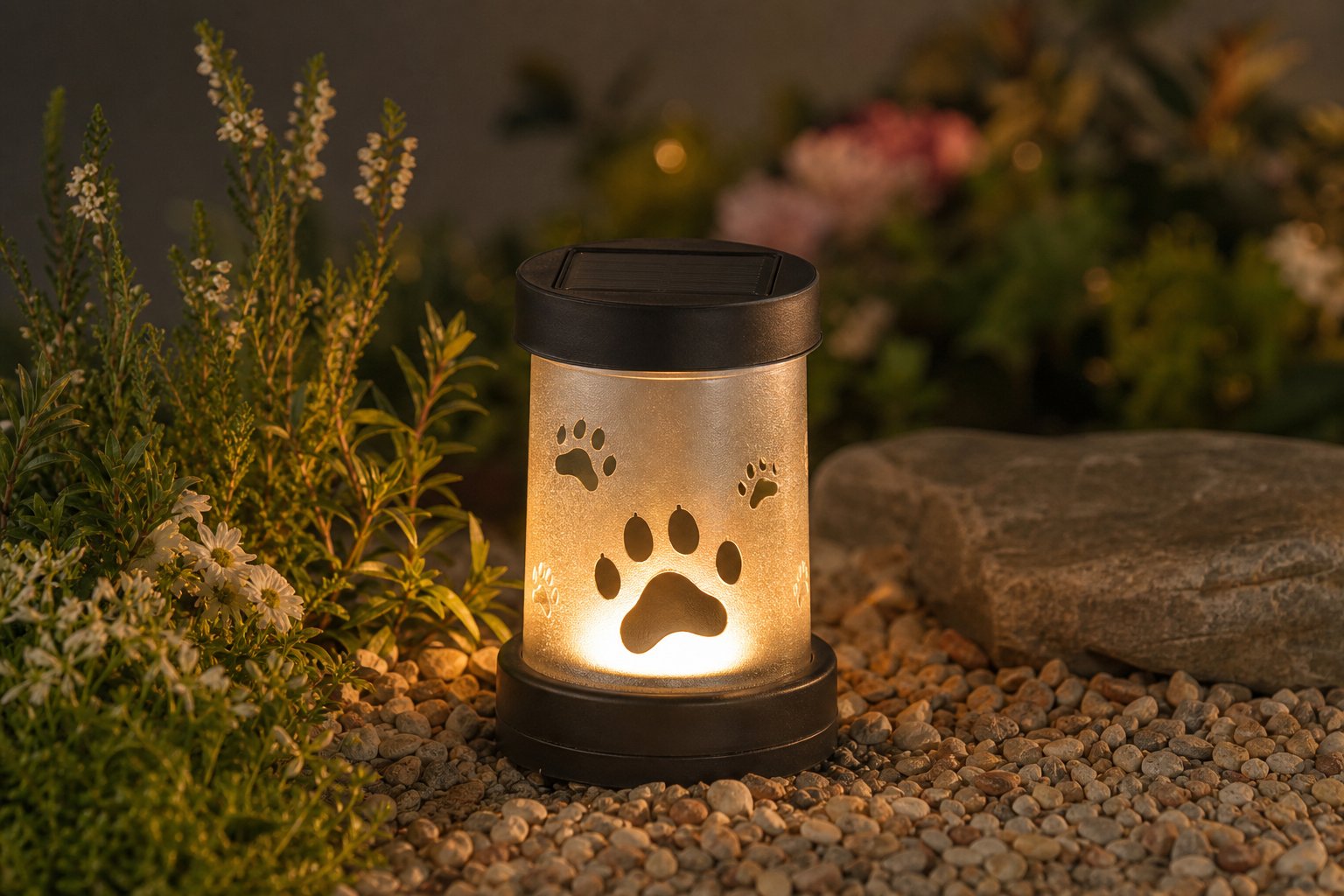
Memorial goods are photographed twice, and the two jobs are different. The clean marketplace shot has to inform: dimensions, finish, engraving area, nothing hidden. The scene shot has to mean something: it shows the object where it will live — on a shelf beside a collar, in a garden at dusk — and quietly tells the buyer "this belongs in that moment." Props are how a scene speaks. Chosen well, they carry the emotion; chosen badly, they shout over it.
One scene, one story
Before touching a single prop, decide the story of the frame. A garden stone is a spring-morning story: dew, soft shade, new growth. A wooden urn is an indoor story: linen, a windowsill, the pet's collar resting nearby. A crystal keepsake is a light story: one beam, one shadow. When every element in the frame serves the same sentence, the photo needs no caption. When props argue with each other — a birthday ribbon beside a memorial candle, say — the buyer feels the falseness even if they cannot name it.
Props to reach for — and props to leave in the box
| Works, and why | Fails, and why |
|---|---|
| Linen, raw wood, stone surfaces — neutral, warm, honest textures | Bright party props (balloons, ribbons) — the wrong occasion entirely |
| A single unlit candle — quiet ritual without staging a séance | Staged graveyard theatrics — reads morbid, invites platform complaints |
| Dried grasses and seed pods — grief's natural seasonal language | Plush toys and cartoon figures — cheapens a serious purchase |
| The pet's own collar and tag (with the owner's permission) — personal, specific, real | Religious symbols on generic listings — excludes buyers of other faiths; keep those for targeted lines |
| Scale references: a hand, a book, a coin — answers "how big is it" before it is asked | Empty tabletop hero shots — urns systematically read larger than they are, feeding "smaller than expected" returns |
Practical rules from the field
- Natural light, soft shadow. Window light or overcast daylight suits the category; hard flash adds a catalog coldness that fights the subject.
- Shoot the garden line outdoors, at the edges of the day. Early or late light flatters slate and granite and shows solar lights doing their job.
- Real pets, calm and unrehearsed — never staged distress. A resting animal at a respectful distance is enough; manufactured sadness reads as manipulation and hurts conversion.
- Show the engraving legibly. One tight shot of the name-and-date layout per personalized SKU; legibility is the buyer's unspoken question.
- Keep one quiet scene per SKU family. Five scenes of one urn dilute the story; five products in one consistent world build it. Consistency across the crystal and glass keepsake line does more for perceived quality than any single hero shot.
None of this requires a studio budget. What it requires is restraint: fewer props, honest light, one story per frame. The scene photograph in this category is not decoration — it is the product's way of showing where it will stand when it matters.
FAQ
Do I need scene photos for every SKU?
Every SKU family, not every SKU. One consistent scene carried across a product line, plus clean white-background shots for each SKU, covers both meaning and information.
Can I use a real pet in the frame?
Yes, calmly and without staging: a resting animal at a distance, ideally with the owner present. Never photograph distressed animals or manufacture sorrow — audiences and platforms both read it as exploitation.
How do I show the size of a small keepsake honestly?
Put a scale reference in the frame — a hand, a coin, a book edge — and keep dimensioned line drawings in the listing gallery. Honest scale photos are the cheapest return-prevention in the category.
What background suits keepsake jewelry?
Soft neutral fabric in low-contrast light, with one reflective surface to show the metal's finish. Avoid busy textures: at pendant scale, they read as noise.
Sources & notes: prop and lighting guidance reflects common practice in product and lifestyle photography for home and memorial goods (industry convention); the size-perception and returns observation follows widely reported complaint patterns for urn listings; platform-sensitivity note is industry awareness — confirm each ad platform's current bereavement-content policy before running campaigns.
Need product lines worth photographing?
Engraved samples in 3–5 days let you shoot real pieces, not mockups — ask for a sample box of the lines you sell.