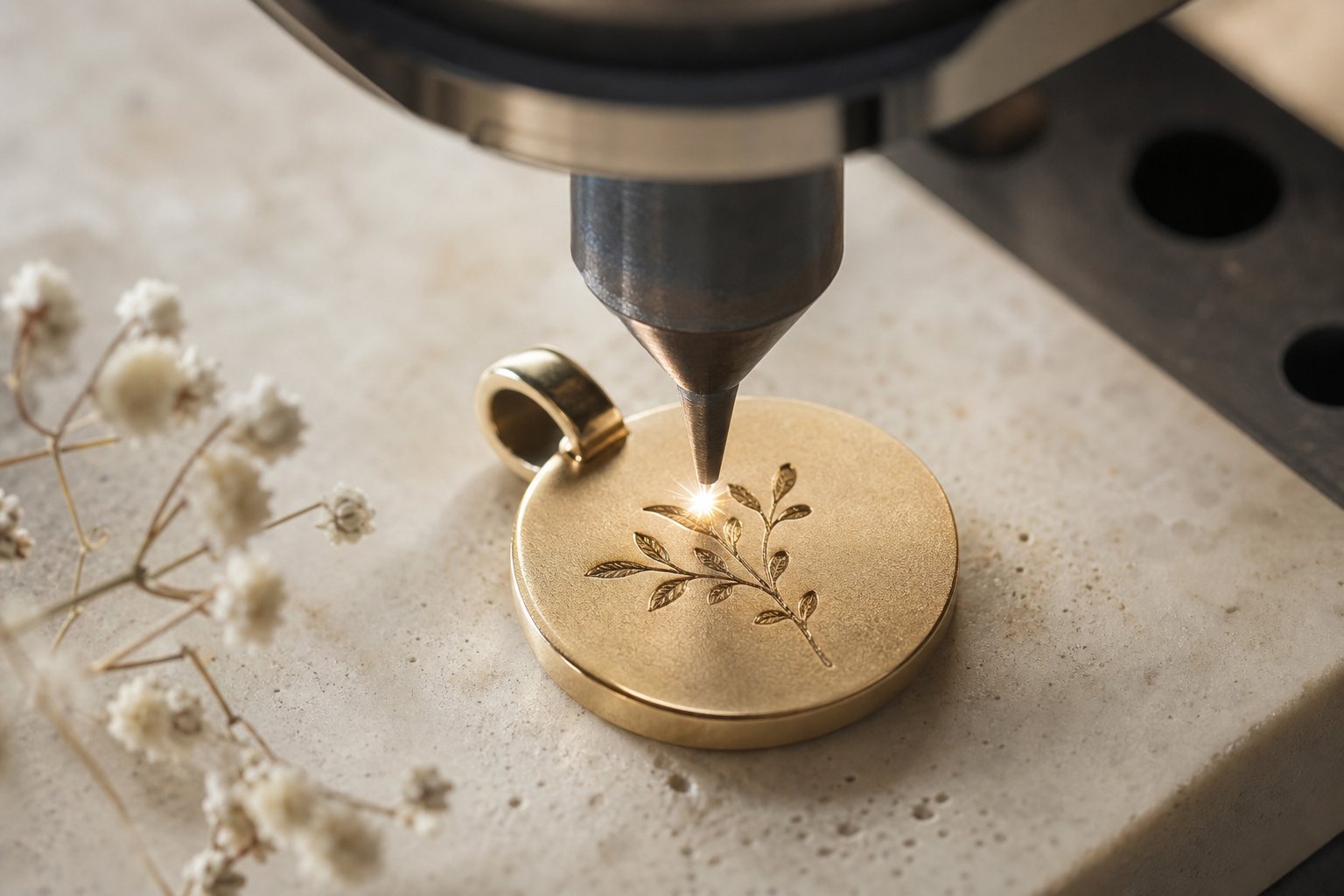
Personalization is the rare upsell that costs the seller little and means everything to the buyer. The market's own growth narrative names it: Grand View Research's 2026 report cites the personalization of memorial products among the drivers of demand. For a B2B buyer the significance is operational: engraving and printed personalization change a product's cost structure only slightly, while changing its competitive position completely. This article walks through the economics and the production discipline behind doing it well.
Why this category personalizes differently
In general merchandise, personalization is a novelty feature. In memorial goods it is the point: a memorial is by definition singular — one animal, one name, one span of dates. A stock urn can be beautiful and still feel slightly wrong at the handover, the way an unsigned card feels wrong at a funeral. That is why retailers in this category can price personalization as a tier rather than a fee: the personalized version is not the same product plus text; it is a different, more fitting product (analysis).
The four production routes
| Method | Materials | Cost character | Best suited for |
|---|---|---|---|
| Laser engraving | Wood, metal, slate, granite, leather | Minutes per piece; one-time vector setup | Names, dates, paw line art, short verses |
| UV printing | Ceramic, crystal, acrylic, coated wood | Minutes per piece; image prep per order | Full-color photos, portraits, ornaments |
| Hand carving | Stone, hardwood | Artisan time — a real, visible cost | Premium lines, one-off commissions |
| Enamel & color fill | Brass, zinc alloy urns | An added process step after engraving | Accent color on premium metal lines |
All four routes are mature in the supplying craft clusters: laser engraving and UV printing have become the standard personalization processes of cross-border e-commerce, available at single-piece minimums on stock forms (supplier-side observation, 2026). Hand carving remains genuinely artisanal — price it as such. For a concrete look at the two machine processes, see our engraving vs. UV printing comparison; for layout rules, our engraving layout guide.
The margin math, honestly
Exact cost deltas vary by factory, material and order size, so beware anyone quoting a universal uplift percentage. What can be said structurally: engraving adds machine minutes and a one-time setup, against a retail context where the family has just paid USD 100–450 for the cremation itself (CareCredit/Synchrony, 2023) and where the category formally splits into economy, mid-range and premium tiers (360iResearch, 2026). In that context, retailers typically price personalized versions above the stock version, and the personalized product largely exits direct price comparison — no two are alike, so no two listings undercut each other (industry practice; analysis).
The operational economics matter as much as the price side. Personalization is a per-piece variable process, so it does not force high minimums: PAWSANGEL runs engraving from MOQ 100 pcs on urns and stones and from 50 pcs on jewelry, with engraved samples in 3–5 days and bulk production in 20–35 days. For a clinic or funeral service, that means a personalized handover product without inventory risk.
The discipline that protects the margin
- Artwork approval in writing: every name, date and spelling confirmed by the buyer before production starts.
- Fixed layout rules: font hierarchy, line count and placement agreed in advance — not improvised per order.
- QC checkpoints: depth, alignment, contrast — and spelling checked twice, once by machine record, once by a human.
- Spares and rework policy: engraved pieces cannot be re-engraved; agree spare units and a re-make path before the first PO.
- Data care: customer photos and names are grief data; handle, store and delete them deliberately.
FAQ
How much does laser engraving add to unit cost?
Structurally: minutes of machine time plus a one-time vector setup. The precise delta varies by material, coverage and order size, so ask your supplier to quote it per SKU rather than accepting a universal percentage (industry practice).
What MOQ applies to personalized products?
Personalization is per-piece and variable, so it does not raise minimums: PAWSANGEL engraves from 100 pcs on urns and stones and from 50 pcs on jewelry, with engraved samples in 3–5 days.
Can a photograph be engraved?
Full-color photographs are better served by UV printing on ceramic, acrylic or coated wood; laser engraving renders photos as silhouettes or line art, which suits minimalist memorial styles.
How do we prevent engraving errors at volume?
A written artwork-approval step, fixed layout rules, dual spelling checks and agreed spare units. The process costs minutes per order and removes the most damaging failure mode in the category.
Sources & notes: Grand View Research (2025) for personalization as a documented demand driver; CareCredit/Synchrony (2023) for the US cremation fee context; 360iResearch (2026) for the economy/mid-range/premium tier framework; process maturity per supplier-side observation (2026). Cost characters are qualitative industry practice — no universal uplift percentage is claimed.
Want personalization priced as a tier, not a fee?
Send us your SKU list — we return engraving quotes, sample lead times and layout rules with MOQ from 50 pcs, replying within 12 business hours.